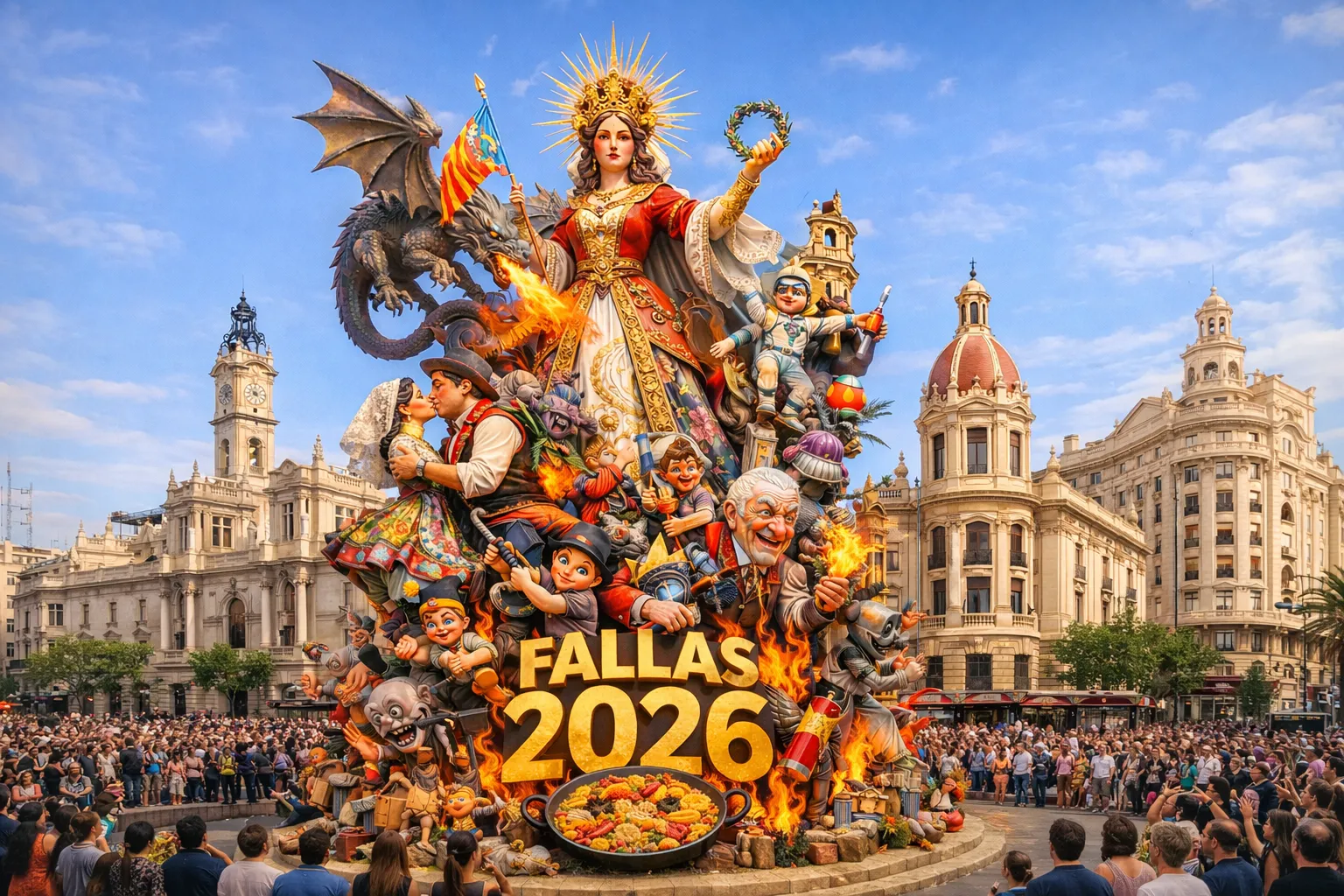
Las Fallas is one of those festivals you don’t really “understand” until you’ve felt it: the ground-rumbling mascletàs, the giant satirical monuments (ninots), the flower parades, and then—suddenly—fire everywhere on the final night.
Valencia is the heart of it all, of course. But if your base is the Costa Blanca, you’ve got some brilliant local options too—especially in Dénia, plus smaller-but-lively celebrations like Pego, and even a “bonus” Fallas season in Elda later in the year.
Below is a very complete, 2026-specific guide you can publish quickly and still feel genuinely useful and human.
What exactly are Las Fallas?
At its core, Las Fallas is community-made street art with a sense of humour, built to be burned.
Every neighbourhood commission spends months designing and constructing a falla: a towering monument made up of ninots (caricature figures). These scenes poke fun at politics, celebrities, local issues—anything current—then the whole thing is ceremonially burned in La Cremà.
UNESCO describes the Fallas as a tradition celebrating the coming of spring, centred on these monuments and the community life around them.
Locals say: a mascletà isn’t “fireworks”—it’s a rhythm of sound you feel in your chest.
Fallas Valencia 2026: key dates you actually need 🗓️
If you’re planning your trip (or deciding which days to brave the crowds), these are the headline moments.
The official start
La Crida (official opening): 22 February 2026 in Valencia (from the Serranos Towers).
Daily mascletàs (daytime fireworks… for your whole body)
1–19 March 2026, 14:00 in Plaza del Ayuntamiento (Valencia city).
The “big week” in Valencia
14 March: Ninot Infantil results (Exposición del Ninot Infantil closes)
15 March: Plantà Infantil + Ninot Indultat (adult) results
16 March: Plantà of all fallas (main monuments completed)
17–18 March: Ofrenda de Flores (flower offering)
18 March 23:59: Nit del Foc (huge fireworks show)
19 March: San José + Cabalgata del Fuego + La Cremà (everything burns)
Our tip: if you only do one day, choose 16–18 March—you’ll see fully finished monuments and catch the Ofrenda or fireworks without it being “final-night intense”.
The big Fallas events explained (so you know what you’re watching)
Plantà (building night)
This is when the monuments are finished and judged. In Valencia, the main Plantà is 16 March (and children’s monuments the day before).
Exposición del Ninot + Ninot Indultat
Before everything burns, each commission submits a ninot to an exhibition. The public vote saves one—the Ninot Indultat—which goes to the Fallas Museum instead of the flames. The official programme lists the Ninot Indultat announcements around 14–15 March.
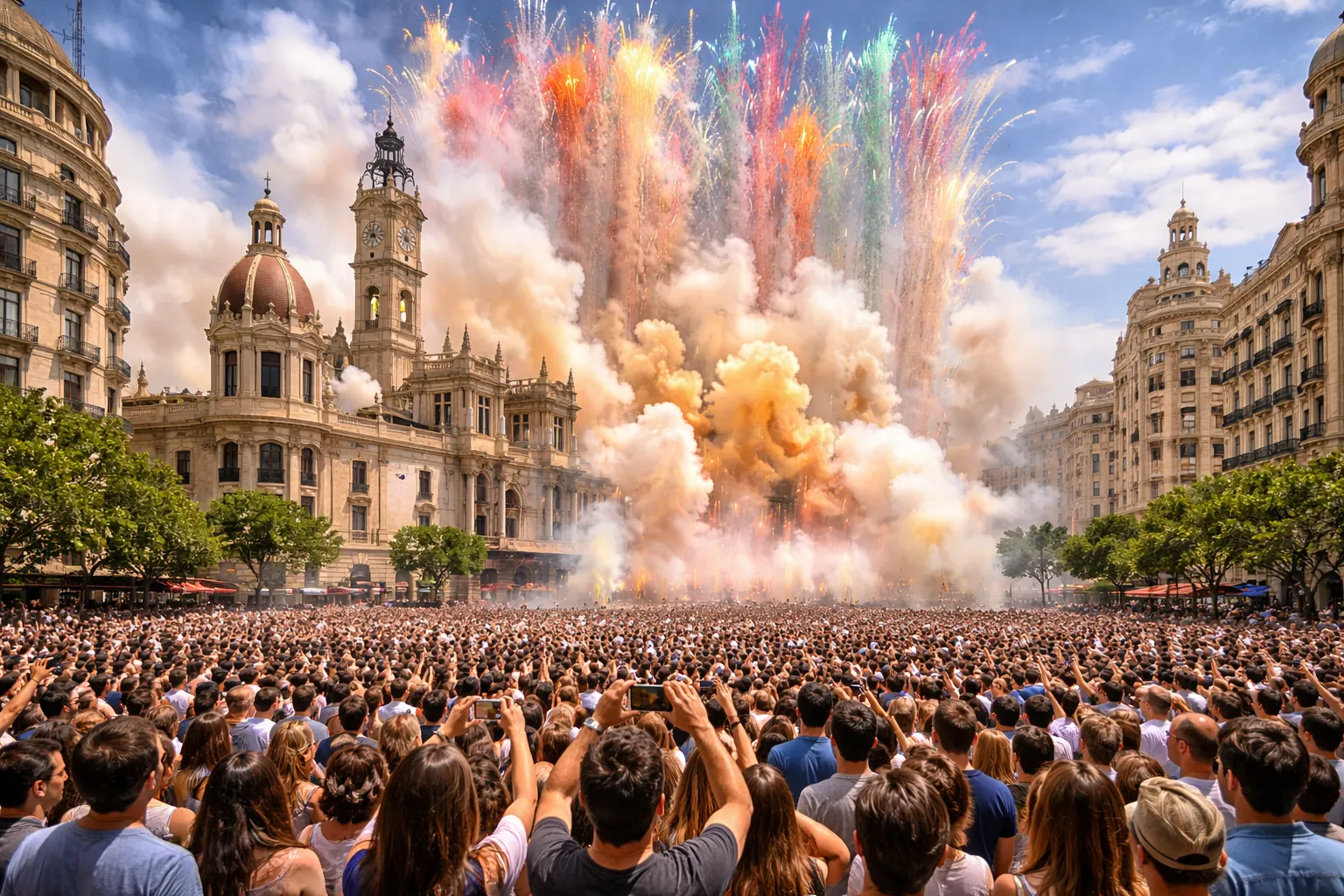
Mascletà (14:00 daily in Valencia)
It’s a structured “composition” of controlled explosions—more about rhythm, pressure and crescendo than visuals. The official daily 14:00 schedule is part of the 2026 programme.
Our tip: bring earplugs—especially for kids. You’ll enjoy it more, and you can still feel the “final earthquake” through the ground.
Ofrenda de Flores (17–18 March in Valencia)
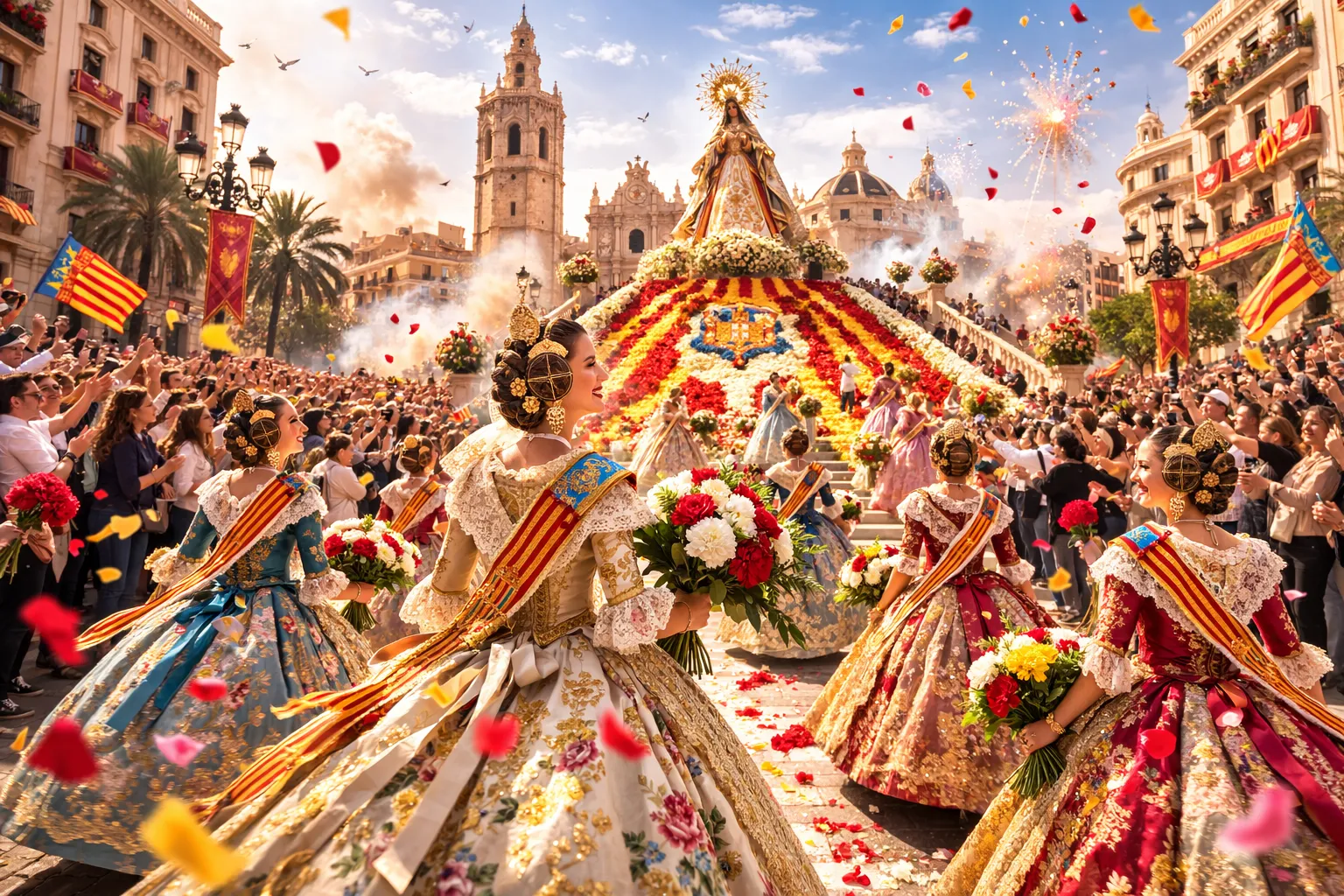
Thousands of falleras and falleros parade in traditional dress, offering flowers that form a massive floral mantle for the Virgin in Plaza de la Virgen. The Valencia programme includes the 17–18 March Ofrenda schedule by sectors.
Nit del Foc (18 March, 23:59)
The late-night show that feels like the “grand finale”… even though the burning is still to come. In 2026 it’s listed at 23:59 on 18 March.
Cabalgata del Fuego (19 March)
A fiery parade that leads straight into the burn night atmosphere. Listed at 19:00 on 19 March in the official programme.
La Cremà (19 March)
The children’s monuments burn first, then the main fallas—ending with the big ones, including Plaza del Ayuntamiento. Official cremà times are listed across the evening.
Where to go in Valencia during Fallas (best areas for first-timers) 🎆
Valencia is packed with fallas, but most visitors end up doing some version of this:
1) Plaza del Ayuntamiento (for mascletà + the municipal falla)
This is the iconic daily 14:00 mascletà location and one of the busiest zones.
Practical reality: it gets crowded early, streets close, and the experience is intense.
2) Ciutat Vella (old town) for atmosphere + classic monuments
The historic centre is where you’ll feel the “walking museum” vibe: monuments on tight streets, bands passing, pop-up food stalls, and sudden bursts of firecrackers.
3) Plaza de la Virgen (for the Ofrenda)
If you want the emotional side of Fallas—music, dress, flowers—this is the spot during 17–18 March.
4) Monteolivete / river area (for the big night fireworks)
The official programme places the main fireworks shows around the Puente de Monteolivete on key nights (including Nit del Foc).
What to eat and drink during Fallas (the tasty essentials)
You don’t need a full food tour to eat well during Fallas—just look for the seasonal classics:
Buñuelos de calabaza (pumpkin fritters) with hot chocolate
Churros and chocolate (the other classic)
Paella/arroces (Valencia region = rice culture)
Horchata (if you need a break from chocolate)
Here’s what we recommend: do the mascletà at 14:00, then immediately escape for a late lunch—restaurants fill fast right after the crowd disperses.
Practical tips: crowds, noise, and getting around (this matters)
Expect road closures, packed pavements, and slow taxis in central Valencia.
Bring ear protection if you’re sensitive to sound (or with children).
Wear closed shoes—there’s debris, wax, and the occasional firecracker casing.
Keep your plans flexible: weather and crowd control can shift timings.
Valencia also runs major city logistics during Fallas (extra cleaning, toilets, containers, etc.) because the footfall is huge.

How to do Fallas from the Costa Blanca 🚗
If you’re staying in places like Alicante, Benidorm, Altea, Calpe, Moraira, Jávea/Xàbia or Dénia, you’ve got two good strategies:
Strategy A: Day trip to Valencia (for a “big dose” of Fallas)
Aim for one headline event (mascletà, Ofrenda, or Nit del Foc).
Arrive early, and plan a “quiet break” mid-afternoon away from the centre.
Strategy B: Celebrate locally (less stress, more local vibe)
Dénia is the standout for Costa Blanca Fallas (details below).
Pego is smaller but very authentic.
Benidorm brings a fun, accessible version with three commissions.
Fallas on the Costa Blanca: where to go 🏖️
Dénia Fallas 2026 (Marina Alta’s big one)
Dénia’s Fallas programme runs for weeks, with the core celebrations leading into 19 March.
Key 2026 highlights from the official Dénia programme:
28 Feb: La Crida in Dénia (19:00, Plaza de la Constitución).
10–16 Mar: Plantà period.
17 Mar: Awards + district mascletades (14:00).
19 Mar: Ofrenda (11:00) + mascletà + full cremà schedule into the early hours.
What makes Dénia special is that you can walk between multiple districts and still feel like it’s a local party, not just a spectator event.
Our tip: if you’re new to Fallas, Dénia is a brilliant “first experience”—plenty of energy, but easier logistics than central Valencia.
Benidorm Fallas 2026 (easy to combine with a beach break)
Benidorm celebrates Fallas with three commissions (Benidorm Centro, Els Tolls, Rincón de Loix). The local tourism listing highlights 16–19 March as the core dates and mentions the Plantà, Ofrenda and Cremà as main moments.
This is a great option if you want:
a compact route (you can see a lot quickly)
plenty of accommodation and dining
a festival vibe without the “Valencia-scale” crowds
Pego Fallas (small-town, very traditional)
Pego’s official tourism listing describes Fallas running 16–19 March, including Plantà, Ofrenda, mascletà and Cremà.
If you’re based around the northern Costa Blanca (especially inland Marina Alta), Pego is one of those places where you’ll feel the community spirit instantly.
Elda Fallas (September, not March — your “second chance”)
Elda is a special case: it celebrates Fallas later in the year, typically in September, with its own identity.
For 2026, local reporting notes the official monument (“Elda Got Talent”) is scheduled to be planted on Wednesday 23 September.
This is worth mentioning in a Costa Blanca guide because it means: even if you miss March Fallas, you can still catch a real Fallas celebration in Alicante province later on.
Sample itineraries
1 day in Valencia (from the Costa Blanca)
Morning: arrive + walk a monument route in a central neighbourhood
14:00: mascletà (Plaza del Ayuntamiento)
Afternoon: explore monuments + a late lunch away from the centre
Evening: pick one “big moment” (lights, music, or a fireworks night depending on date)
2–3 days, calmer option (Costa Blanca-based)
Day 1: Dénia monuments + local events
Day 2: Valencia day trip for mascletà + “must-see” monuments
Day 3: Ofrenda (Valencia) or Cremà night locally (depending on your energy level)
Looking for activities on the Costa Blanca?

Frequently Asked Questions ❓
When are Fallas 2026 in Valencia?
The main festival builds to 15–19 March 2026, with the official opening (Crida) on 22 February and daily mascletàs from 1 March.
What’s the best day to visit if I only have one?
For most visitors: 16–18 March (finished monuments + Ofrenda/fireworks without the full burn-night intensity).
What time is the mascletà in Valencia?
14:00, daily during the run-up and main days.
Is Fallas family-friendly?
Yes, but it’s loud. Use ear defenders for kids, avoid the densest crowd zones, and pick daytime monument routes.
Do I need tickets for Fallas?
Most street events are free. Some experiences (balconies for mascletà, certain parties, some museum entries) may cost extra.
Where is the Ofrenda in Valencia?
It ends at Plaza de la Virgen, and runs across 17–18 March by sectors.
Are there Fallas on the Costa Blanca too?
Yes—especially Dénia (major) plus Pego and Benidorm.
Is Elda part of the March Fallas?
Elda celebrates Fallas in September, which is unusual and great if you miss March.
Editor’s Conclusion
If you want the “full cinematic version” of Fallas 2026, Valencia is the place—daily mascletàs, the iconic Ofrenda, and a Cremà night that feels unreal.
But for a Costa Blanca-focused guide, the real win is this: you don’t have to do Valencia city to experience Fallas properly. Dénia delivers a big, authentic celebration with easier logistics, Pego gives you small-town tradition, Benidorm makes it accessible and easy to combine with a holiday, and Elda even gives you a second Fallas season in September.