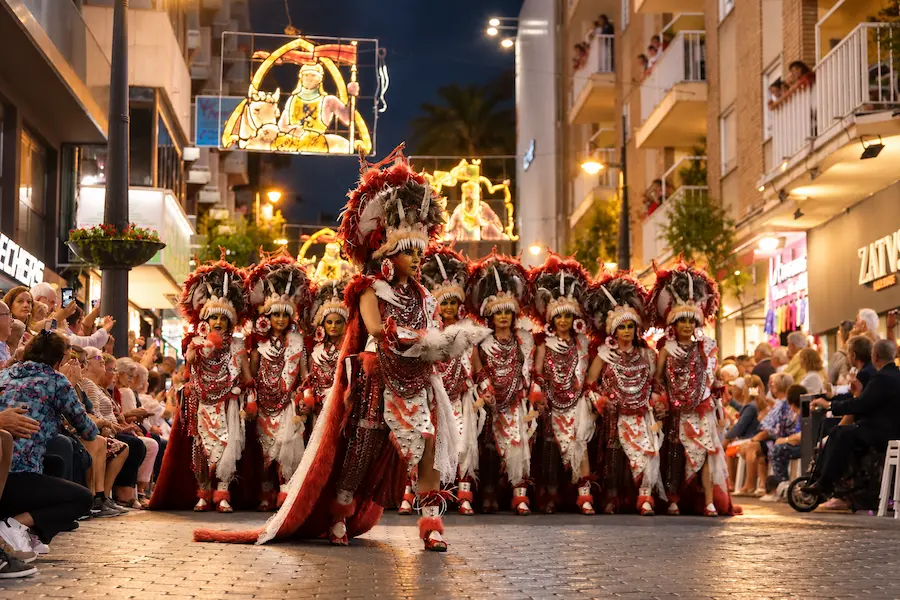
Benidorm’s Moros y Cristianos fiesta runs from Thursday 1 to Sunday 4 October 2026, filling the old town and Playa de Levante with parades, cannon fire, historical reenactment and four days of street celebration. The centrepiece is the Gran Entrada — a procession of costumed filaes through the city’s main streets — but the fiesta actually opens on the beach with a staged Moorish landing and closes with a floral offering to the town’s patron saint, San Jaime.
Unlike Benidorm’s Fiestas Patronales in November, which honour the Virgen del Sufragio with a broader city-wide programme, Moros y Cristianos is built entirely around the historic Reconquest narrative — Christian and Moorish “bands” reenacting the town’s medieval past through costume, music and choreographed confrontation. It’s one of Benidorm’s oldest fiestas and is officially declared a Fiesta of Local Tourist Interest.
When and Where
- Dates: Thursday 1 October – Sunday 4 October 2026
- Main venue: Plaza SS MM los Reyes de España (castle set piece), Playa de Levante, and the historic centre streets around Calle Tomás Ortuño
- Cost: Free to attend — all parades and street events are open-air and open to the public
- Verified: September 2026, cross-referenced against Benidorm town hall’s fiestas department and local press coverage of the 2026 cargos festeros presentation
The 2026 fiesta was formally launched in June with the presentation of the year’s cargos festeros (festival officers), including the 2026 Rey Moro, Emilio Escudero, representing the filà Tuareg.
Day-by-Day Programme
Thursday 1 October — Parlamento de la Invasión Mora
The fiesta’s official opening act takes place at 20:00 in Plaza SS MM los Reyes de España, at the foot of a temporary castle installation. Christian troops gather at their camp as the Moorish forces arrive after a staged landing. The two sides parley over offerings and mock medieval games; when no agreement is reached, the act ends with the “Mora Invasion” of the town, followed by a communal cena festera (festival dinner) bringing together all six filaes — Benidarhims, Nazaries, Tuareg and Musulmanes Tagarinos on the Moorish side; Cruzados and Cavallers de la Baronia on the Christian side.
Friday 2 October — Diana and the Alardo
The morning Diana winds through the town’s central streets from around 10:30. In the evening, the Cristiana Embajada and Alardo mirror the previous night’s Moorish ceremony from the Christian side, culminating in the symbolic “Reconquista” of Benidorm’s fortress.
Saturday 3 October — Gran Entrada Mora y Cristiana
The fiesta’s central event: a full parade of Moorish hosts and Christian troops through Benidorm’s main streets, historically starting around 19:30–20:00. This is the largest and most photographed act of the fiesta, with elaborate costumes, music bands and the Reina Mora and Reina Cristiana leading their respective bands.
Sunday 4 October — Parlamento and Ofrenda
The closing day opens around midday with the Parlamento between the Alcaide del Castillo and the Príncipe de Kairuán, after which the Moorish prince and his forces symbolically withdraw. This is followed by the ofrenda de flores — a floral offering to San Jaime, the town’s patron — and a mass at the church. The fiesta closes in the evening with a themed float parade, where filaes throw confetti, streamers and small gifts to the crowd.
Exact clock times shift slightly year to year and are confirmed closer to the date on the official programa de mano; the sequence and venues above have held consistent across recent editions.
Where to Watch the Gran Entrada
The Saturday parade route runs through the historic centre, historically between Calle Tomás Ortuño and nearby central streets. Arrive at least 30–45 minutes early for a spot along the barriers — the route is narrow in places and fills up fast once the marching bands are audible. Terraces and bars along the route get busy; booking ahead or arriving well before 19:00 is the safer option for a table with a view.
The Thursday night “invasion” takes place on Playa de Levante, Benidorm’s main beach, giving it a very different, open-air atmosphere compared to the tighter old-town streets used later in the fiesta.
Getting There and Parking
Benidorm’s old town streets are pedestrianised for the fiesta, so driving in is only useful as far as the surrounding car parks. The L’Aigüera and Poniente public car parks are the most practical options within walking distance of the route, though both fill early on parade evenings. Benidorm’s TRAM and regular bus network both serve the town centre directly, and given the crowds, arriving by public transport avoids the worst of the post-parade traffic.
Practical Tips
- Book restaurants early. Old-town terraces along the parade route are reserved days in advance for Saturday’s Gran Entrada.
- Expect noise. Arcabucería (blank-firing musket volleys) is a standard part of Moros y Cristianos fiestas across the region — expect loud, sudden bangs during the parades, which can catch first-time visitors off guard.
- Pair it with the old town. Much of the action passes through Benidorm’s Old Town, which is worth exploring outside fiesta hours too, away from the crowds.
- Check the wider calendar. For the town’s full year of fiestas, including the November Patron Saint celebrations, see the Benidorm Festivity Calendar 2026.
A Different Fiesta to November’s Patronales
It’s easy to conflate Benidorm’s two big autumn fiestas. Moros y Cristianos in early October is historical reenactment built around the Reconquest narrative; the Fiestas Patronales de Benidorm in November honour the Virgen del Sufragio with a broader, peñas-driven programme spanning nearly a week. Visitors planning an autumn trip around Benidorm’s fiesta calendar may want to consider both — they sit roughly five weeks apart in 2026.
For a wider view of the town beyond fiesta season, the Benidorm town hub covers beaches, viewpoints and things to do year-round.